
Call us now :08045478631
 Send Inquiry
 Send Inquiry
iodine flask
MOQ : 10 Units
iodine flask Specification
- Color
- Transparent
- Voltage
- 220-380 Volt (v)
- Dimension (L*W*H)
- 220 x 150 x 50 Millimeter (mm)
- Capacity
- 350 ML Milliliter (ML)
- Material
- Glass
- Weight
- 50-200 Grams (g)
iodine flask Trade Information
- Minimum Order Quantity
- 10 Units
- Payment Terms
- Telegraphic Transfer (T/T), Cash in Advance (CID), Cheque, Cash Advance (CA)
- Supply Ability
- 10 Units Per Day
- Delivery Time
- 2-3 Days
- Sample Available
- Yes
- Sample Policy
- Sample costs shipping and taxes has to be paid by the buyer
- Packaging Details
- Thermocol Packing.
- Main Export Market(s)
- Western Europe, Asia, Australia, Eastern Europe, Middle East, Central America, Africa, South America, North America
- Main Domestic Market
- All India
About iodine flask
Technical Specification
| Material | Borosilicate glass |
| Shape | Conical |
| Capacity | 100ml |
| Brand | ALCON |
| Usage/Application | Laboratories |
| Colour | Transparent |
| Country of Origin | Made in India |
Premium Glass Material
Constructed from high-quality glass, this iodine flask offers excellent chemical resistance and durability. Its transparent nature supports clear visualization of reactions, making it indispensable in environments where precision is key.
Optimized Capacity and Versatility
With a 350 ML capacity, the flask accommodates various laboratory applications. It is adept at handling iodination reactions, sample storage, and solution preparation, catering to the needs of researchers and industrial professionals alike.
FAQ's of iodine flask:
Q: How should the iodine flask be used in laboratory processes?
A: The iodine flask is primarily used for iodine titration, chemical reactions, and sample storage in laboratory settings. To maximize accuracy and safety, ensure the flask is clean and dry before use, and handle it with care to prevent breakage.Q: What are the benefits of choosing a glass iodine flask over plastic alternatives?
A: Glass offers superior chemical resistance, clarity for visual observation, and does not react with iodine or other chemicals, ensuring accurate experimental results and safer usage compared to plastic versions.Q: When is it appropriate to use this flask for chemical reactions?
A: This flask is ideal for chemical processes involving iodine or similar reagents, especially when heating, mixing, or storage is required within the 350 ML capacity range. Its voltage compatibility makes it suitable for environments with electrical heating setups.Q: Where can I purchase the iodine flask in India?
A: You can acquire this flask from distributors, exporters, manufacturers, suppliers, and traders across India. They typically offer bulk and customized orders tailored to laboratory and industrial requirements.Q: What is the process for cleaning and maintaining the flask?
A: After use, rinse the flask thoroughly with distilled water and a mild laboratory detergent. Allow it to air dry or use a clean, lint-free cloth. Regular inspection for chips or cracks ensures longevity and consistent performance.Q: How does the transparent color aid in laboratory work?
A: The transparent glass allows for direct observation of reactions and solution levels, enabling precise measurement and monitoring, which is essential for laboratory accuracy and safety.Q: What usage scenarios best suit the 350 ML flask capacity?
A: The 350 ML flask is ideal for mid-volume sample preparation, reagent mixture, and titration processes, making it suitable for educational labs, research institutes, and industrial quality control laboratories.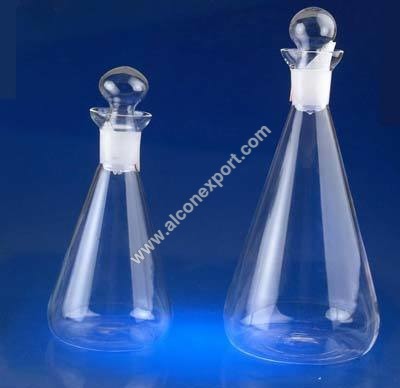
Tell us about your requirement

Price:
Quantity
Select Unit
- 50
- 100
- 200
- 250
- 500
- 1000+
Additional detail
Mobile number
Email

More Products in Glassware Category
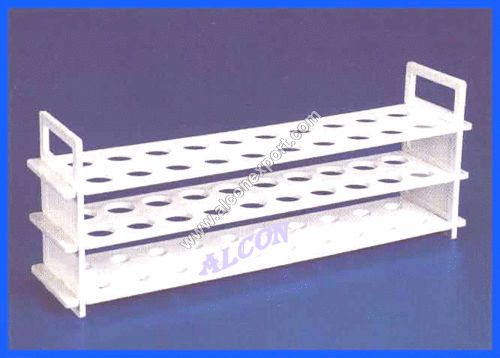
test-tube-stand
Price 2800 INR
Minimum Order Quantity : 10 Units
Weight : 50200 Grams (g)
Color : White
Capacity : Up to 12 test tubes
Coil Condensers, Graham
Minimum Order Quantity : 10 Units
Weight : 200500 Grams (g)
Color : Transparent
Capacity : Depends on condenser length and width
Material : Glass
Dimroth Condenser for Soxhlet
Minimum Order Quantity : 10 Units
Weight : 200500 Grams (g)
Color : Transparent
Capacity : Suits standard Soxhlet apparatus
Material : Glass
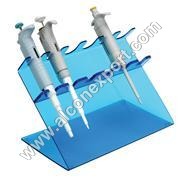
Stands for Micro pipettes
Price 3500 INR
Minimum Order Quantity : 10 Units
Weight : 50200 Grams (g)
Color : Sliver
Capacity : 200350 ML
Material : PVC

 Send Inquiry
Our Products
- Agriculture Testing Equipment
- Models of Animal Husbandry
- Biology Equipments
- Chemistry Equipments
- Forensic Departmant Equipments
- Geographical Items
- Mathematics Equipment
- Medical Equipment
- Pharmacy Equipment
- Physics Equipment
- Models of Sanitary Department
- Models of Solar Equipment
- Survey Equipment
- Visual Aids
- Electronics Lab Equipments
- Laboratory and Scientific Equipment
- Hospital Furniture
- Lab Ovens
- Centrifuge
- Incubator
- Glassware
- Microscope
- Engineering Lab Equipment


4375, Science Market,Ambala Cantt - 133001, Haryana, India

Mr Umesh Gupta
(Proprietor)
Mobile :08045478631
 Send Inquiry
 Send SMS
 Call Me Free
Developed and Managed by Infocom Network Private Limited.
